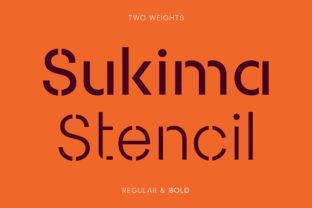
Understanding the Sukima Stencil: When Precision in Negative Space Matters
Stencil work often focuses on the positive shapes left behind, but for many designers, crafters, and DIY enthusiasts, the space around and between shapes is just as important. Enter the Sukima Stencil—a tool specifically designed to manage and beautify the gaps in patterns, borders, and repeated motifs. Derived from the Japanese word for “gap” or “interval,” the Sukima Stencil brings a disciplined approach to negative space that is difficult to achieve with conventional stencils.
In this article, we examine what makes the Sukima Stencil distinct, how it compares with other stenciling methods and alternatives, and where it fits best in your project toolkit. Whether you are a seasoned papercrafter, a home decorator experimenting with wall patterns, or a graphic designer exploring tactile applications, understanding the tradeoffs of this specialized tool will help you make a more informed choice.
What Is a Sukima Stencil and What Makes It Distinct?
At its core, a Sukima Stencil is a reusable template that focuses on creating consistent, deliberate gaps between repeated elements. Unlike a traditional stencil that cuts away the area where paint will land, a Sukima Stencil often includes interconnected or precisely spaced cutouts that leave behind a lattice of negative space. This allows you to apply a pattern where the background shows through in measured intervals, creating an effect similar to “dropout” or “reverse” stenciling—but with much finer control over the spacing.
What really sets the Sukima Stencil apart is its engineering. The cutouts are typically designed with alignment marks, registration points, or interlocking features that help the user repeat the pattern seamlessly across a surface. In many versions, the stencil material itself is flexible yet durable, often made from mylar or polyester film, allowing it to lie flat on uneven surfaces while maintaining sharp edges. The emphasis on interval consistency means that even a novice can produce borders and repetitive designs that look machine-made—without the need for measurement.
Another distinct characteristic is the aesthetic vocabulary. Many Sukima Stencil designs draw from traditional Japanese patterns—such as asanoha, seigaiha, or kikko—but the concept has been adapted for a wide range of modern geometric and organic patterns. The common thread is the intentional, often symmetrical spacing that creates visual rhythm through absence rather than presence.
Comparing the Sukima Stencil with Other Stenciling Approaches
To appreciate the value of a Sukima Stencil, it helps to place it alongside the alternatives you might consider for similar projects. The most natural comparison is with standard single-layer stencils and multi-layer stencils that build up positive shapes sequentially.
Standard Positive Stencils
A typical stencil for wall art or cardmaking cuts away the areas you want to paint. It leaves solid shapes of color on the surface. If you try to create a repeating border with equal gaps using a standard stencil, you must either measure and align each repeat yourself or rely on a stencil that includes built-in spacing guides. Most generic stencils do not include such guides, making consistent gaps a challenge. The Sukima Stencil addresses this directly: the spacing is part of the design, so every application yields uniform intervals between motifs.
Masking Tape and Freehand Approaches
For achieving negative-space patterns, some crafters use low-tack masking tape to create their own gaps. While this offers maximum flexibility, it is time-consuming and prone to misalignment. The Sukima Stencil eliminates the guesswork, especially for complex repeat patterns that would require dozens of tape strips. That said, freehand methods remain superior for truly custom, irregular spacing or when you want organic variation that a stencil cannot provide.
Digital and Laser-Cut Alternatives
If you own a cutting machine (like a Cricut or Silhouette), you can design and cut your own stencils with precise spacing. This gives you full control over gap width and motif selection. The Sukima Stencil is essentially a predesigned, ready-to-use version of what you might create digitally. The tradeoff is convenience versus customization. A pre-made Sukima Stencil saves design time and material waste, but may not match your specific measurement needs. If you need a gap of exactly 3.2 mm and the stencil provides 5 mm, you will have to adapt your project or look for a different tool.
Strengths of the Sukima Stencil
Users consistently point to several advantages that make the Sukima Stencil a worthwhile investment for certain types of work.
- Repeatability without measurement. Once you place the stencil and apply paint, you know every gap will be identical. This is especially useful for borders on walls, frames, or fabric where symmetry is critical.
- Speed and efficiency. A single pass can cover a large area. With alignment marks built in, you can shift the stencil and continue without starting over.
- Clean design aesthetic. The negative-space emphasis produces an airy, modern look that many find more sophisticated than solid block patterns. It works well in minimalist decor and Japanese-inspired interiors.
- Forgiving of minor errors. Since the gaps are part of the design, small paint bleeds often blend into the negative space rather than ruining a solid shape. This can be a relief for beginners.
These strengths make the Sukima Stencil particularly well-suited for projects where precision is valued but absolute perfection is not required—think hand-painted gift wrap, custom drawer liners, or stenciled furniture accents.
Limitations and Tradeoffs to Consider
No tool is a universal solution, and the Sukima Stencil has clear boundaries that should influence your decision.
Limited design flexibility. The stencil comes with fixed gaps and motifs. If your project requires variable spacing (e.g., widening gaps toward the edges of a surface), the stencil cannot accommodate that. You would need to combine stencil passes with other methods, which can defeat the purpose of using a specialized tool.
Learning curve for alignment. While many Sukima Stencils include registration marks, moving the stencil along a long wall or a curved surface without losing alignment takes practice. Misregistration leads to overlapping gaps or uneven intervals, and fixing such mistakes can be messy.
Surface restrictions. The stencil works best on flat or gently curved surfaces. Deep textures (like rough brick or heavily textured wallpaper) prevent the stencil from lying flat, causing paint to seep under the edges and blur the clean negative-space lines. In such cases, a more flexible stencil material or a different technique (e.g., sponge dabbing with a stencil) might still work, but the crispness of the gaps will suffer.
Material and cost considerations. Quality Sukima Stencils are generally more expensive than basic stencils from craft stores, due to the precision cutting and durable material. For one-time use or very small projects, a more affordable alternative may be wise. However, if the stencil will be reused many times (e.g., for a series of hand-printed textiles), the cost per use drops significantly.
When the Sukima Stencil Shines: Realistic Examples
Let us look at a few scenarios to see where the Sukima Stencil outperforms other options.
Home décor: adding a repeating border to a feature wall. You want a geometric pattern that runs horizontally across a living room wall. Using a Sukima Stencil with built-in spacers, you can apply the pattern quickly, moving from left to right with consistent gaps that visually tie the room together. A standard stencil would require you to measure each repeat, and masking tape would take hours. Here, the tradeoff of limited design choice is worth the time savings.
Papercraft: creating layered card fronts. A cardmaker wants a delicate lattice behind a focal image. A Sukima Stencil in a subtle tone-on-tone technique provides the perfect backdrop. The consistent gaps give a professional look that is hard to replicate by hand. If the cardmaker instead used a digital cutting machine, the setup time might outweigh the benefit for a small batch.
Fabric stenciling: custom scarf patterns. Fabric artists sometimes use Sukima Stencils to create continuous repeating motifs along borders. The flexible material conforms to fabric better than rigid stencils, and the gaps integrate naturally into the weave. However, fabric paint tends to bleed more than wall paint, so test swatches are essential.
When You Might Choose an Alternative
The Sukima Stencil is not the right choice for every negative-space project. Consider these situations:
- When you need irregular, organic spacing. If your design calls for gaps that grow or shrink gradually, freehand techniques or custom-cut stencils are more appropriate.
- When the surface is highly textured or curved. For a 3D object like a lamp shade or a heavily textured vase, a flexible stencil designed for that specific curvature may work, but generally, a Sukima Stencil will struggle to maintain uniform contact.
- When you are on a strict budget for a single project. Purchasing a specialized stencil for a one-off craft session may not be economical. Borrowing a stencil from a friend or using low-cost alternatives (like hand-cut freezer paper) could suffice.
- When color mixing is complex. If you need to apply multiple colors that overlap into the gaps, the Sukima Stencil can become cumbersome. Multi-layer stencils designed for color separation may be easier to manage.
Decision Factors: Making an Informed Choice
As you evaluate whether to invest in a Sukima Stencil, weigh the following factors against your project requirements:
- Project scale. Large, repetitive patterns favor the stencil. Small, custom projects may not justify the cost.
- Desired interval precision. If uniform gaps are non-negotiable and you lack a cutting machine, the Sukima Stencil is a strong candidate.
- Surface compatibility. Test the stencil on a scrap piece of the same material before committing.
- Reusability. If you plan to use the stencil across multiple items (e.g., a series of placemats), the investment pays off.
- Aesthetic preference. The Sukima approach yields a specific look—controlled, orderly negative space. If you prefer irregular, hand-crafted variations, look elsewhere.
Ultimately, the Sukima Stencil is a capable tool for creating fine, repeating gaps that elevate a project from amateur to intentional. It fills a niche between full flexibility (freehand) and complete automation (digital cutting), offering a tactile, satisfying process with predictable results. By understanding its strengths and limitations, you can decide when to bring it into your workflow and when to reach for another method.
No single approach fits every design challenge. The Sukima Stencil earns its place through its unique focus on the interval—the space between that holds the pattern together. For projects that demand that thoughtful gap, it remains a reliable and elegant choice.